

Counterattack your Panic Attack
ENG- Engels / 236
Sale price
€49,95
Regular price €59,95
Skip to product information


Counterattack your Panic Attack
Panic can feel impossible to make sense of while it’s happening. This digital panic attack guide and workbook helps you understand what can happen in your body and mind, explore different ways to respond and work out what actually feels useful for you.
Launch offer: Get 50% off
STARTSOMEWHERE
Sale price
€49,95
Regular price €59,95
Taxes included.
Shipping calculated at checkout.
What’s inside the guide?
Counterattack Your Panic Attack is a 236-page digital panic attack guide and workbook with clear explanations, practical tools, exercises and space to reflect on your own patterns and experiences.
You do not have to work through everything in order. Skip what does not feel useful, pause when you need to and come back to the parts that do.
More about what’s inside the guide below ↓
How do I receive it?
After purchase, the digital guide is sent to the email address connected to your order. You can download the PDF and save it to your phone, tablet or computer so you can come back to it whenever you need it.
Can’t find the email? Check your spam or junk folder first. If it still hasn’t arrived, contact HMH and we’ll help.
Is this therapy?
No. Counterattack Your Panic Attack is an educational self-help resource, not therapy, medical treatment or a diagnosis. It is designed to help you understand panic attacks, recognise your own patterns and explore different tools and coping strategies. It does not promise to prevent, treat or cure panic attacks.
Panic is confusing isn't it?
You can know you’re having a panic attack and still have no idea what to do with that information.
Maybe you’ve Googled the symptoms while your heart was racing. Saved breathing techniques you couldn’t remember when you actually needed them. Tried something that worked once and did absolutely nothing the next time. Or read so much advice that you ended up with ten different things to try and no clue where to start.
That’s one of the reasons I created Counterattack Your Panic Attack.
Not to give you one perfect technique or tell you there’s a right way to handle panic. The guide is there to help you understand what may be happening in your body and mind, recognise patterns and explore different tools without the pressure to make every one of them work.
BREATHEWHAT IF IT HAPPENS AGAIN?COUNT 5 THINGSGROUND YOURSELFDRINK WATERWHY IS MY HEART DOING THIS?TRY TO RELAXIS THIS NORMAL?UNDERSTAND FIRST
INSIDE THE GUIDE
Take a look inside
A few preview pages from Counterattack Your Panic Attack, so you can get a feel for how the guide explains, explores and helps you work through things at your own pace.
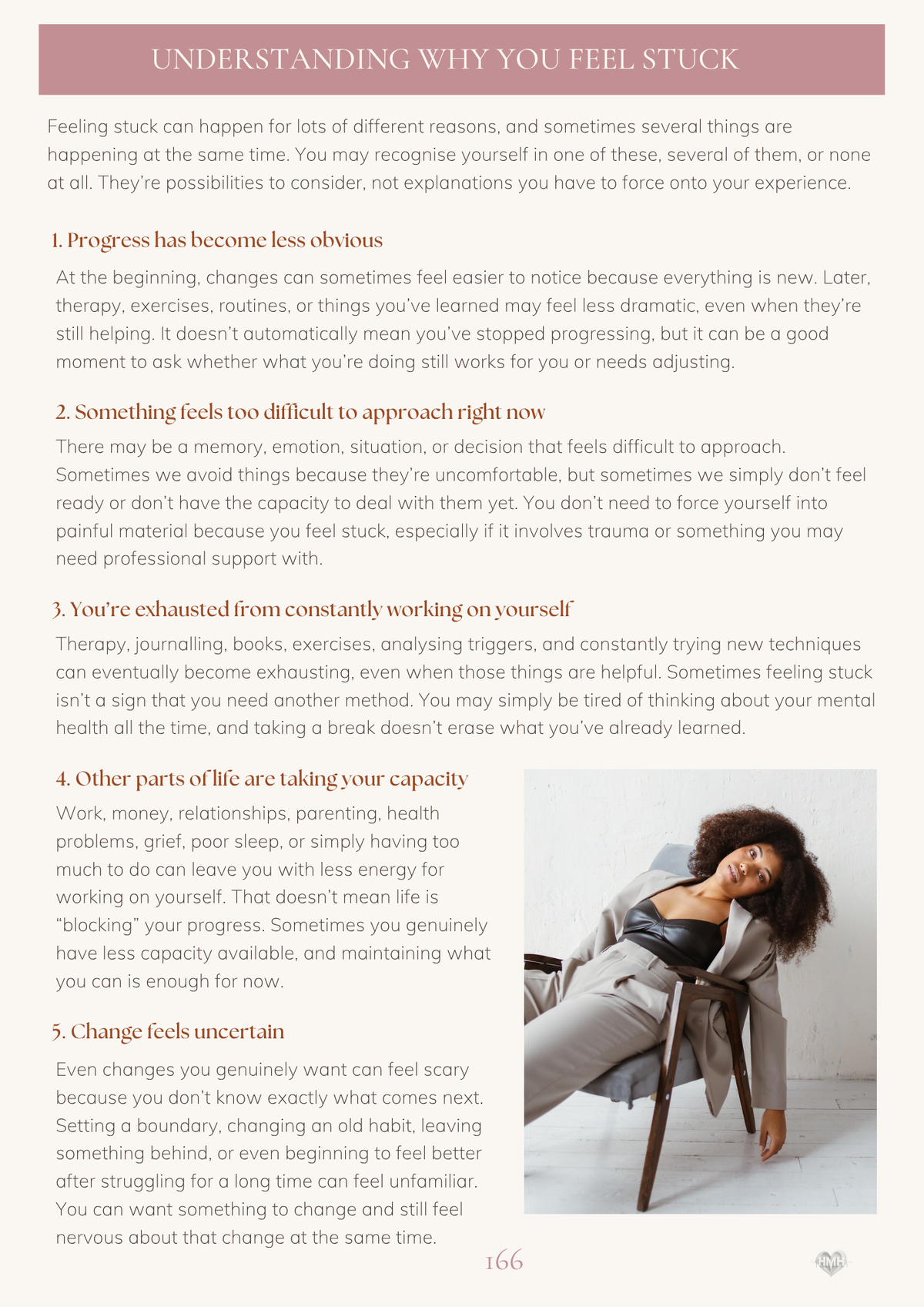
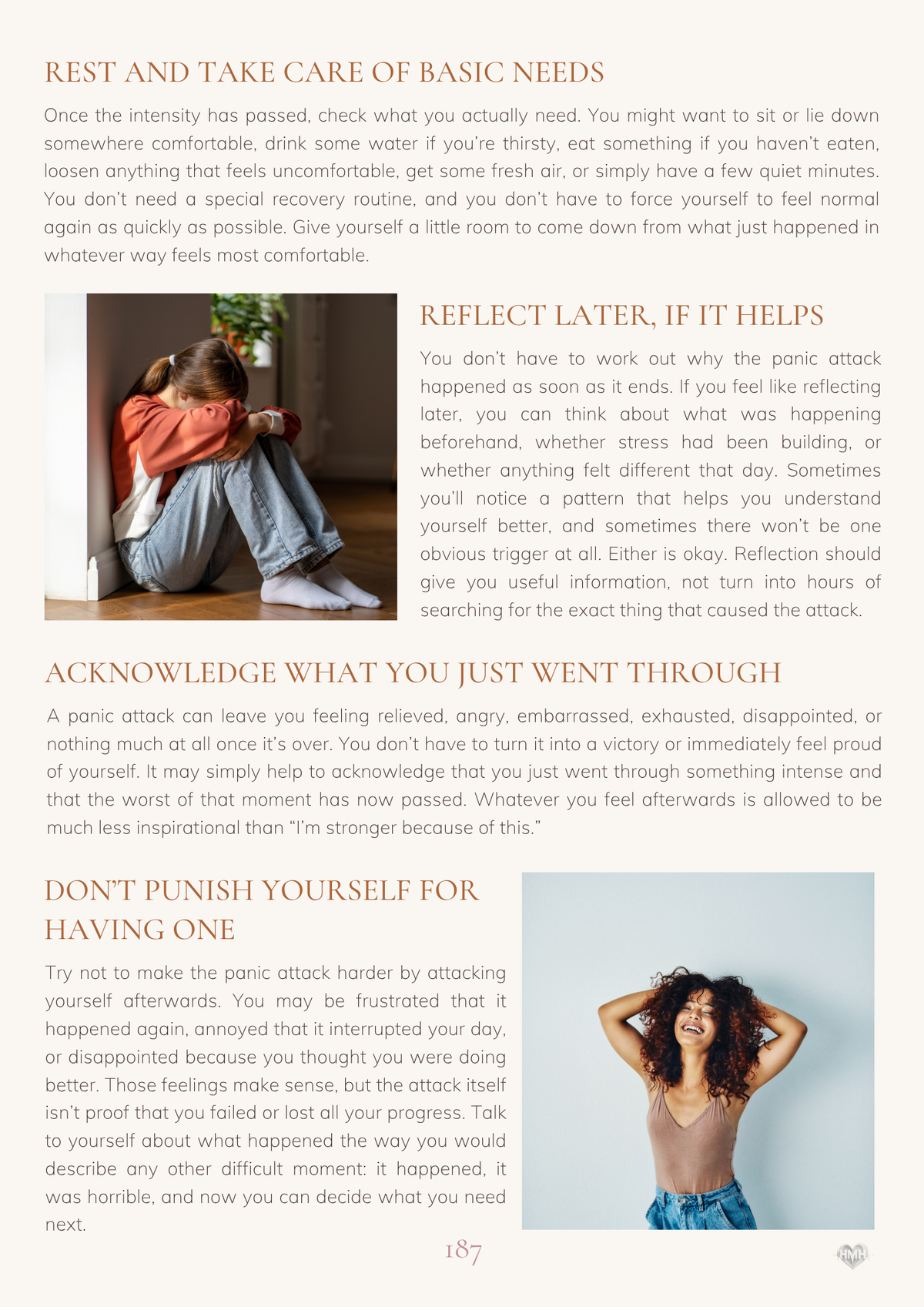
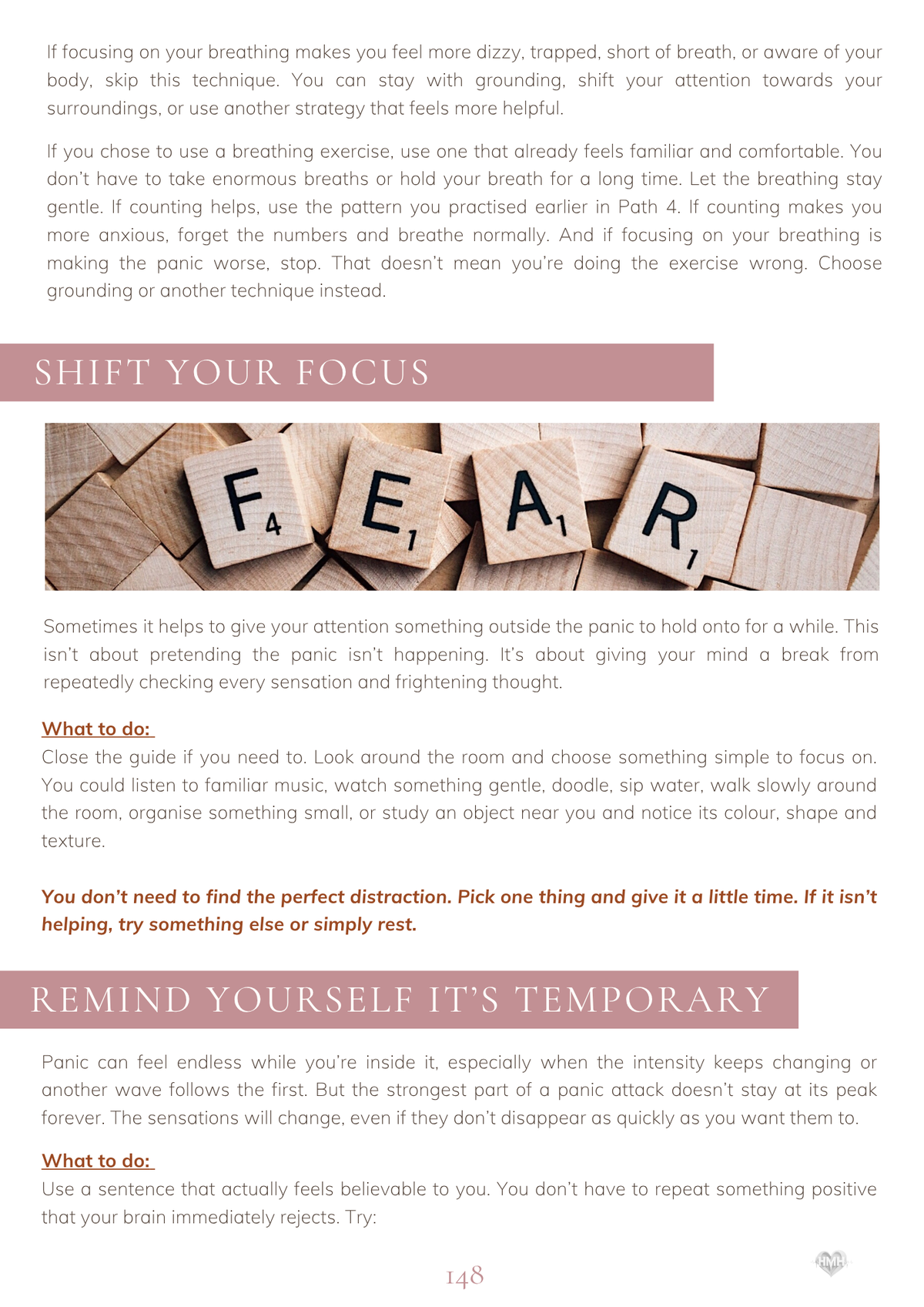
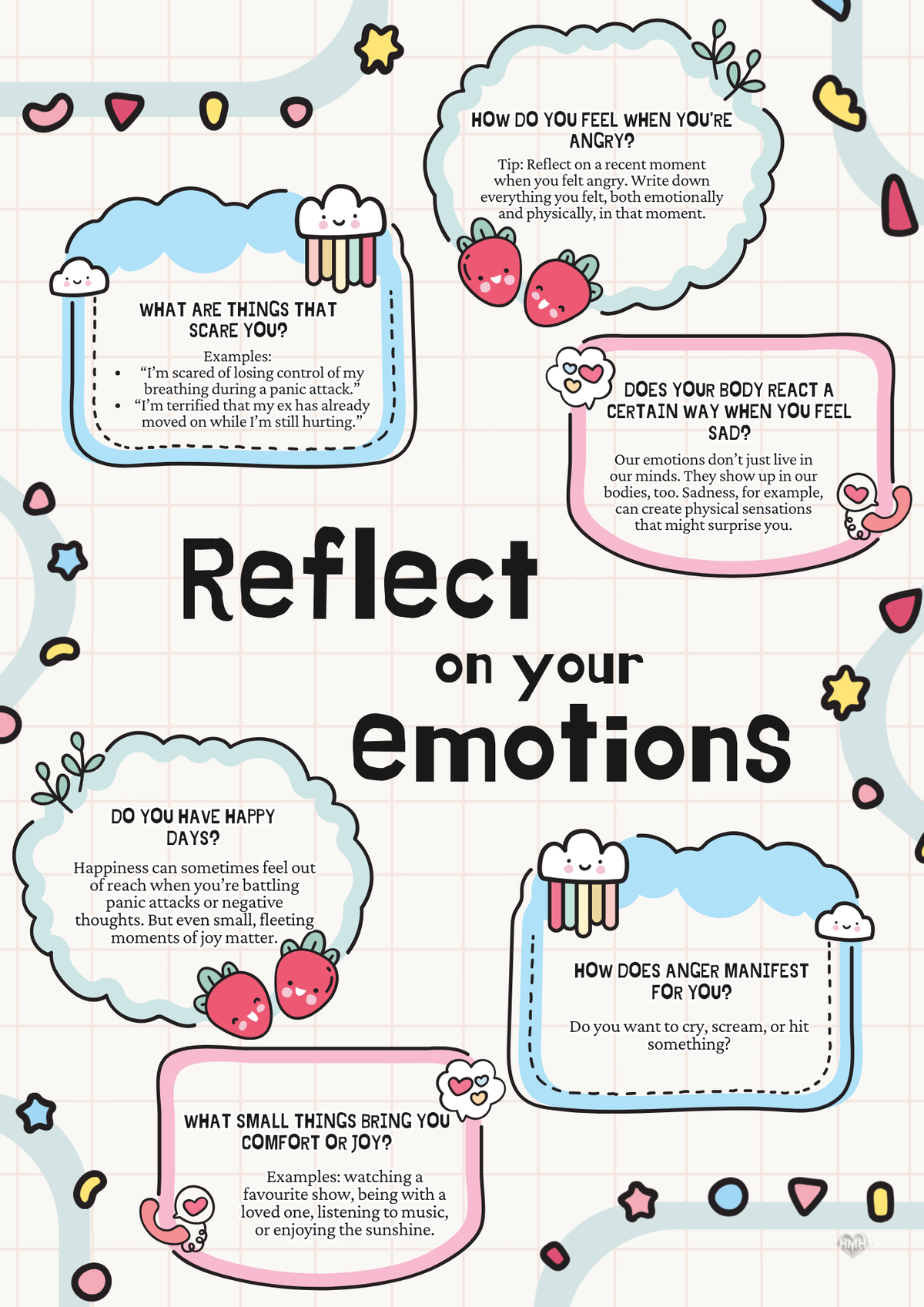
Healing on your own terms
Counterattack Your Panic Attack was never made to be followed perfectly from beginning to end.
You can skip pages, come back later, spend more time on one part and barely touch another. Some sections might click straight away. Others may not feel useful yet, or at all. That’s okay.
The point of the guide isn’t to make you complete a programme the “right” way. It’s to give you one place to return to when you want more understanding, more structure or something practical to work with.
Read it when you feel calm. Come back to it after a difficult moment. Save the parts that help. Leave the rest.
Take what helps. Leave what doesn’t. Come back when you need to.

INSIDE THE GUIDE
Let me explaine the 33 paths
Counterattack Your Panic Attack is a 236-page digital panic attack guide and workbook built around 33 Paths. Together, they explore panic itself, practical coping tools, triggers, thoughts, emotions, relationships, setbacks and the parts of life that exist beyond panic. You can follow the Paths in order, skip ahead or come back to the ones that feel relevant later.
PATH 1
The meaning of a panic attack
Understand what a panic attack is, how it can affect both your mind and body and why it can feel so frightening even when there is no clear danger.
PATH 2
Breathing for Relief
Explore different breathing exercises and notice which, if any, feel comfortable enough to return to when anxiety starts to rise. There is no need to force a technique that does not feel right for you.
PATH 3
Coping mechanisms for panic attacks
Try different ways of responding when panic symptoms feel overwhelming and begin building a small collection of tools you can choose from depending on what you need in the moment.
PATH 4
Identifying your emotions
Slow things down and look at what you may actually be feeling around the panic. This Path helps you start separating emotions, experiences and reactions instead of letting everything blur together.
PATH 5
Trauma
Explore how painful or difficult experiences may still affect you without comparing your story to someone else’s or deciding that what happened to you “wasn’t bad enough.”
PATH 6
Track your triggers
Look for possible patterns in places, situations, thoughts, memories, physical sensations or periods of stress, while recognising that not every panic attack will have an obvious trigger.
01
PATHS 1–6
Understanding panic & finding your first tools
The first part of the guide starts with the basics: understanding what panic is, trying practical tools and beginning to notice what may be happening around your own attacks.
02
Paths 7–12
Working with your mind & body
This part of the guide moves into the things that can become especially loud around anxiety and panic: sleep, thoughts, physical tension and the way you respond to what is happening inside you. You’ll explore different ways to slow things down, ground yourself and create a little more space between a feeling and your automatic reaction to it.
PATH 7
Trying to sleep
Explore what can happen when anxiety follows you into the night, from racing thoughts and physical tension to worrying about whether you will sleep at all, and try different ways of making those nights a little easier.
PATH 8
Writing or journalling
Give thoughts and emotions somewhere to go when they feel tangled or difficult to say out loud. Writing can help you slow things down enough to notice what is actually going on instead of holding everything in your head at once.
PATH 9
Mindfulness and grounding
Practise bringing your attention back to what is happening right now without forcing yourself to feel calm, emptying your mind or pretending uncomfortable thoughts are not there.
PATH 10
Meditation
Experiment with different ways of intentionally bringing your attention to the present. Your mind will wander, because that is what minds do. The goal is not perfect focus, but learning how to gently return.
PATH 11
Reframing negative thoughts
Look more closely at frightening automatic thoughts and question whether fear is filling in some of the blanks. This is not about replacing everything with positivity, but about learning not to treat every anxious thought as a fact.
PATH 12
Learn how to set boundaries
Explore where your limits are around your time, energy, privacy, emotional capacity, relationships and the way other people speak to or treat you. Boundaries are not about controlling other people, but about recognising what you are willing and able to participate in.
PATH 13
Grief and panic attacks
Explore how different kinds of loss can affect your emotions and sometimes make anxiety or panic feel stronger, whether you are grieving a person, a relationship, a future you imagined or another major change.
PATH 14
The role of relationships in healing
Look at the people around you and how relationships can affect whether you feel supported, understood, pressured or alone while you are dealing with panic.
PATH 15
Complimenting yourself
Practise giving yourself credit for things you normally dismiss or overlook. Complimenting yourself will not magically remove anxiety, but the way you speak to yourself still matters.
PATH 16
Conversating with yourself
Create room for a more honest conversation with yourself instead of automatically distracting yourself, pushing through or telling yourself that everything is fine when it isn’t.
PATH 17
Daily check-ins
Take a few minutes to notice how you are actually doing before automatically carrying on with the day. Sometimes a small check-in helps you catch stress, emotions or needs you had not noticed yet.
03
PATHS 13–17
The people around you, and the way you treat yourself
Panic doesn’t exist separately from everything else in your life. This part looks at loss, relationships and the way you speak to and check in with yourself, including the things that can quietly add to how overwhelmed or supported you feel.
04
PATHS 18–25
When panic actually happens
This part focuses on the moments when panic is no longer theoretical. You’ll look at what to do during and after an attack, how to respond to physical sensations, what setbacks can feel like and why taking a break from constantly working on yourself can sometimes matter too.
PATH 18
Experiencing a panic attack while using this guide
Know what to do if difficult emotions, memories or a panic attack show up while you are working through the guide. You are allowed to stop, close the book and come back when you feel ready.
PATH 19
Body awareness
Explore the physical side of panic and practise noticing what your body is doing without turning every heartbeat, breath or unfamiliar sensation into another warning sign.
PATH 20
Building resilience
Look at resilience without turning it into another expectation to always be strong. Struggling, needing support and taking time to recover do not cancel out your ability to keep going.
PATH 21
Stuck in your healing process
Make room for the periods where you have been trying, learning and making changes but it still feels as though nothing is moving. Feeling stuck does not automatically mean nothing has changed.
PATH 22
Pausing your healing process
Give yourself permission to step away from constantly analysing, journalling, practising or trying to improve for a while. Taking a break from working on yourself is not the same as giving up.
PATH 23
Coping with setbacks
Explore what happens when a difficult day, another panic attack or an old pattern makes you feel as though you are back at the beginning, without letting one setback erase everything that came before it.
PATH 24
What to do after a panic attack
Look after yourself after the intensity passes, whether you feel exhausted, shaky, emotional, irritated, numb or simply ready to stop thinking about it for a while.
PATH 25
Complain and let go
Not everything needs to become a lesson. Sometimes you are angry, hurt, overwhelmed or completely done, and you just need somewhere to admit that something sucked before letting some of it go.
PATH 26
Careful with your happiness
Explore happiness without placing all of it in one person, place, achievement or version of your life. The things outside of you can absolutely matter, but they do not have to carry the entire weight of whether you are okay.
PATH 27
How to find joy and a purpose
Reconnect with the things that make life feel interesting, enjoyable or meaningful without pressuring yourself to discover one perfect passion or grand purpose that explains everything.
PATH 28
Protect your future self
Think about the small choices you can make now that might give future-you a little more preparation, space or support when life becomes difficult again.
PATH 29
In for the win
Give the small wins more credit, especially when ordinary things require far more effort than they normally would. Progress does not have to look impressive from the outside to count.
PATH 30
Travelling
Explore getting out into the world again at whatever scale feels realistic for you, whether that means getting on a plane, taking a day trip or simply going somewhere unfamiliar nearby.
PATH 31
Life Beyond Panic
Think about the parts of your life that exist outside the constant anticipation of another panic attack and notice where fear may have quietly started making decisions for you.
PATH 32
Nutrition and lifestyle support
Look beyond thoughts and coping exercises to the everyday physical side of supporting yourself, including food, movement, rest, routines and other habits that may affect how you feel.
PATH 33
Reflecting on your journey
Finish by looking back at what you have noticed, tried and learned without grading yourself on how much you completed or whether your progress looks the way you expected it to.
05
PATHS 26–33
Life beyond the next panic attack
The final part of the guide starts looking further ahead. Not towards some perfect, completely anxiety-free version of you, but towards the parts of life that can easily get pushed aside when panic has been taking up too much space.
Did you know you can earn a little extra with HMH?
40%
commission on eligible referred sales
Join the Healing Mental Health affiliate programme and share HMH resources with your audience, community or network. Use your personal affiliate link or code and earn commission on eligible purchases made through it. You can find the full programme details, requirements and Affiliate Terms on the affiliate page.

Questions before you buy?
Here are a few practical things you may want to know before getting Counterattack Your Panic Attack.
Counterattack Your Panic Attack is a digital guide and workbook you can access online after purchase.
After purchase, you’ll receive access digitally. You can open the guide and return to it whenever you need it.
Yes. The guide is designed to be used digitally so you can access it on different devices.
Yes. You do not have to go through it from beginning to end. You can skip sections, return later and focus on the parts that feel most helpful to you.
No. This guide is not therapy, medical care or a diagnosis. It is a supportive self-help resource.
Inside, you’ll find explanations, workbook exercises, reflection prompts and practical tools to help you better understand panic and respond to it in your own way.
Yes of course, that is the reason it wil be send as a PDF as well. You can print out worksheets, or pages if you want to carry it in your notebook.
It's not needed if you do not want too.
You will receive the products through your personal mail and you will have access through your HMH account. This way you won't be able to lose it.

One place to come back to when panic feels confusing
Counterattack Your Panic Attack is a 236-page digital panic attack guide and workbook with 33 Paths to help you understand panic, explore practical tools and work out what feels useful for you.
236 pages · 33 Paths · Digital guide & workbook